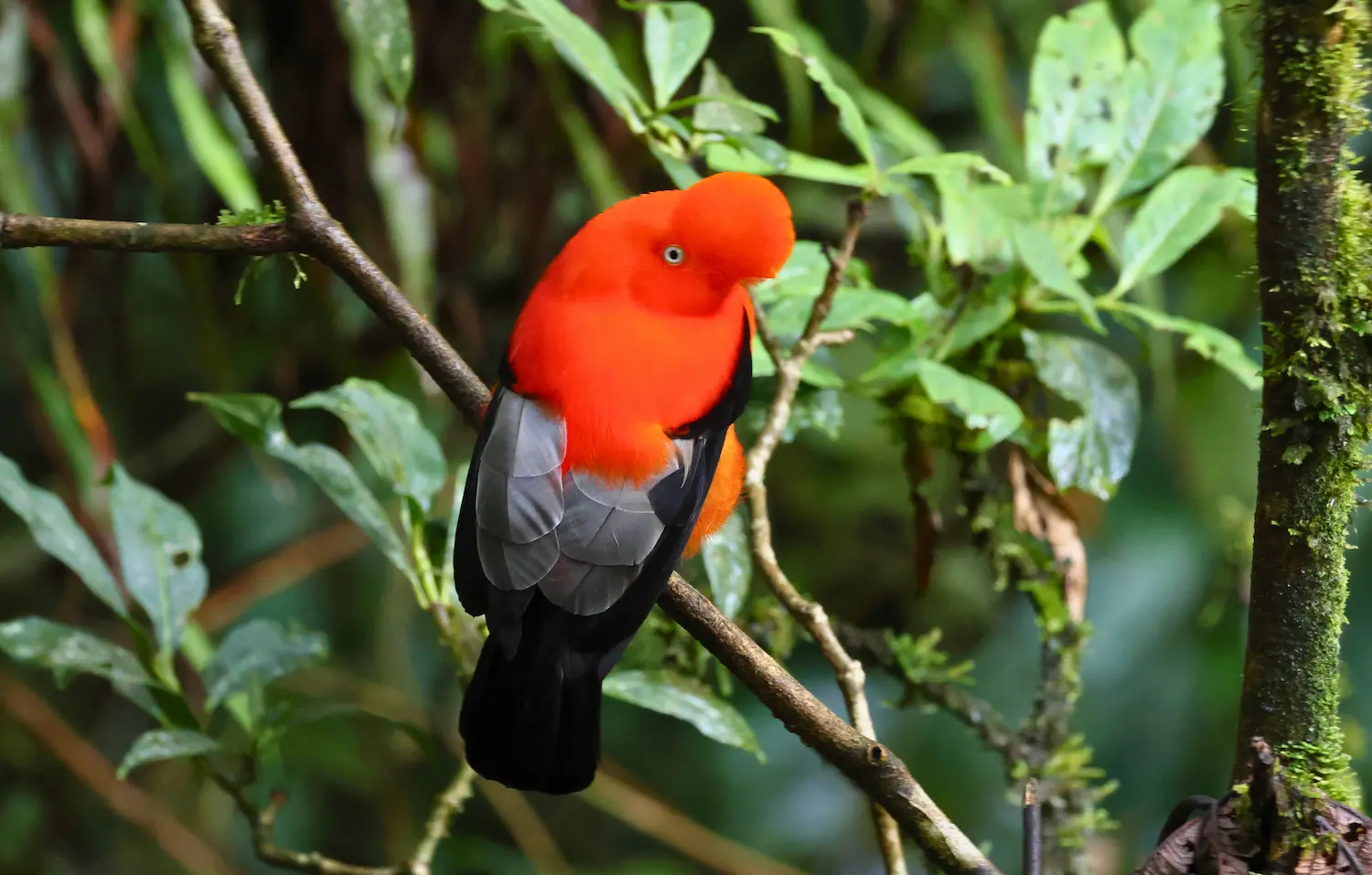
The Vibrant Heart of the Cloud Forest
The Andean Cock-of-the-Rock (Rupicola peruvianus) is more than just Peru’s national bird; it is a prehistoric-looking marvel of the Andean cloud forests. Known locally as the Tunqui, its glowing orange plumage and bizarre disc-like crest make it the “holy grail” for birders.
At Birding Peru Trips, we don’t just show you the bird; we position you at the heart of the action. With over 15 years of guiding experience in the Manu biosphere, our expeditions are timed to catch the raw energy of the morning displays when the forest is most alive.
The Spectacle of the Lek: Nature’s Most Intense Theater
The “Lek” is a communal display ground where males gather to compete for female attention. It is a sensory overload of color and sound.
“Standing in the pre-dawn chill of the Manu cloud forest, you hear them before you see them. The electric, pig-like squeals and snapping bills of the Tunqui create a physical vibration in the air. It’s a primal experience that stays with you forever.” — Juvenal, Lead Guide at Birding Peru Trips
What to expect: During the display, males bob, hop, and fan their crests in a frantic ritual. It’s a high-stakes theatrical performance where only the most vigorous males win the right to mate.
4 Best Locations for Sightings in Peru
While they inhabit humid forests between 800m and 2,400m, these four spots offer the highest success rates for 2026:
- Manu Road (San Pedro): The undisputed gold standard. The lek near San Pedro is world-famous for its accessibility and high bird density. You can often observe 10–15 males simultaneously from a specialized observation platform.
- Abra Malaga Cloud Forest: A hidden gem near Huayopata. This site offers a more intimate experience than the crowded platforms, perfect for those on our private Abra Malaga tours who prefer a quiet, “wild” encounter.
- Machu Picchu & Aguas Calientes: Look for them in the gardens of the Mandor Waterfall. While less frantic than a lek, these sightings often happen in better light, allowing for clear views of the female’s subtle maroon plumage.
- Northern Peru (Abra Patricia): Ideal for those on our Northern Circuit. The subspecies here (R. p. sanguinolentus) features a slightly different hue, and the Alto Mayo Protected Forest provides a stunning, high-altitude backdrop.
2026 Seasonal Guide: When to Visit
| Season | Activity Level | Best For… |
| Sept – Nov | Peak (High) | Maximum bird numbers and intense lekking displays. |
| Dec – Mar | Nesting (Medium) | Seeing females collecting mud for nests; lush green backdrops. |
| Apr – Aug | Feeding (Stable) | Clear weather, great light for photography, and general birding. |
Photography Masterclass: Capturing the “Orange Glow”
Photographing a neon-orange bird in a dark, shadowy forest is a notorious technical challenge. Use these settings to ensure your shots aren’t just “orange blurs”:
Push the ISO: Leks are most active at dawn. Don’t be afraid of ISO 3200 or 6400. Modern AI denoise software can fix grain, but it can’t fix a blurry bird.
Shutter Speed: Aim for at least 1/250s to freeze the head-bobbing action.
Negative Exposure Compensation: The orange crest is highly reflective. Dial in -0.7 to -1.3 EV to prevent “blowing out” the highlights and losing texture in the feathers.
Tripod/Monopod: Essential. In the low light of the Manu Road, even the steadiest hand will struggle with a 500mm lens.
Conservation: Protecting the Tunqui
Despite their fame, the Cock-of-the-Rock faces threats from habitat loss. Birding Peru Trips partners exclusively with eco-lodges that reinvest in forest corridors. By booking a tour, you are directly funding the protection of these lekking grounds.
Experience the Magic of the Manu Road
Our 6-Day Manu Birding Expedition includes a dedicated dawn session at the San Pedro lek with expert spotting scopes provided.
FAQ: Expert Insights
1. What does the female look like?
Unlike the neon male, the female is a sophisticated, dark brownish-maroon. This camouflage is vital for her safety while nesting on rocky cliffs.
2. How early is the departure?
To be at the lek before the birds arrive, we typically leave the lodge by 5:00 AM. Coffee is always provided!
3. Is the San Pedro lek platform accessible?
Yes. Unlike some remote birding spots, the San Pedro platform is a short, manageable walk, making it excellent for families and photographers with heavy gear.