Expert Logistics, Elevational Species Lists & Cloud Forest Photography Secrets
The Manu Road is not merely a birding destination—it is a mandatory pilgrimage for serious birders and wildlife photographers. Descending from the windswept Puna grasslands of the high Andes at 4,000 meters (13,123 feet) to the steamy Amazonian lowlands at 400 meters (1,312 feet), this legendary 100-kilometer stretch of road holds nearly 1,000 bird species—representing roughly 10% of the world’s avian diversity.
What makes the Manu Road globally unique is its continuous, uninterrupted elevational gradient. In a single day of travel, you traverse five distinct ecological zones, each harboring its own distinct, specialized avian community.
This comprehensive guide, curated by the veteran team at Birding Peru Trips, provides the definitive logistical, technical, and species-specific data required to successfully navigate this route. Whether you are chasing rare Peruvian endemics, capturing portfolio-grade wildlife photographs, or immersing yourself in Earth’s most biodiverse corridor, this guide ensures field success.
Quick Navigation
- Quick Answer: The Best Time to Visit
- The 5 Elevational Zones of Manu Road
- Comprehensive Species Checklists by Altitude
- Technical Cloud Forest Photography Guide
- The definitive 7-Day Master Itinerary
- Frequently Asked Questions (FAQ)
- The complete Packing Checklist
Best Time to Visit
What is the best month for birding and photography on the Manu Road?
The optimal window is the dry season from May to October. During these months, trails are stable, mixed-species flocks are highly active, and early morning photographic light is superior.
- Months to Avoid: February and March should be avoided entirely due to peak rainy season conditions, which cause frequent landslides, mudslides, and road closures.
- The Photographer’s Secret: The “shoulder” months of April and November offer exceptional, dramatic mist lighting combined with intense territorial bird activity right before and after the heavy rains.
The 5 Elevational Zones of Manu Road
Zone 1: The High Andes & Puna Grasslands (3,500m – 4,000m)
- The Landscape: Windswept ichu grasslands, jagged rocky outcrops, and stunted, ancient Polylepis forests. The air is thin, the UV index is high, and early mornings are freezing.
- Key Biological Landmark: Abra de Acjanaco (3,560m), the official gateway entry point to Manu National Park.
Top 8 High Andes Target Species:
- Chestnut-breasted Mountain-Finch (Peruvian Endemic) – Look for active flocks on rocky, shrub-dominated slopes.
- Bearded Mountaineer (Peruvian Endemic) – A spectacular, large hummingbird specialized in feeding on the yellow flowers of Barnadesia bushes.
- Rusty-fronted Canastero (Peruvian Endemic) – A classic furnariid skulking in dense mountain scrub; best located by its sharp, rattling call.
- Creamy-crested Spinetail (Peruvian Endemic) – Forages actively in small, noisy family groups on arid hillsides.
- Andean Gull – Frequently seen patrolling high-altitude lakes and river valleys.
- Andean Flicker – A unique, terrestrial woodpecker adapted to foraging in open ground and rocky banks.
- White-collared Jay – Highly vocal, intelligent, and conspicuous when moving through elfin tree lines.
- Puna Tapaculo – Cryptic and reclusive; stays hidden deep within the grass bunches and is best located by its repetitive, rhythmic call.
Pro Tips for the High Andes & Puna:
- Acclimatization is Non-Negotiable: Spend a minimum of 1–2 days in Cusco (3,400m) before ascending to the pass.
- The Acjanaco Sunrise: Depart your hotel before dawn to arrive at the Acjanaco Pass exactly at sunrise. The view of the golden light hitting the endless cloud bank below is a world-class photography landscape opportunity.
- Optics: Bring a high-quality spotting scope; birds in this wide-open terrain are often scattered across distant slopes.
Zone 2: The Elfin Forest & High-Altitude Cloud Forest (2,800m – 3,500m)
- The Landscape: Gnarled, moss-draped stunted trees, high humidity, constant swirling mist, and an otherworldly, ethereal atmosphere. The canopy is low, dense, and tangled.
- Key Biological Landmark: Wayqecha Cloud Forest Biological Station (approx. 2,900m).
Top 8 Elfin Forest Target Species:
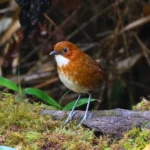
- Red-and-white Antpitta (Peruvian Endemic) – The undisputed “Holy Grail” of the high mossy forest. Regularly visits the specialized worm feeding stations at Wayqecha Lodge.
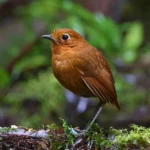
- Urubamba Antpitta (Peruvian Endemic) – Cryptic, ground-dwelling specialist; secretive but highly responsive to careful playback techniques.
- Scribble-tailed Canastero (Peruvian Endemic) – Forages meticulously among moss-laden branches and bromeliads.
- Gray-breasted Mountain-Toucan – Highly vocal, striking, and frequently observed feeding on canopy fruits in small mixed flocks.
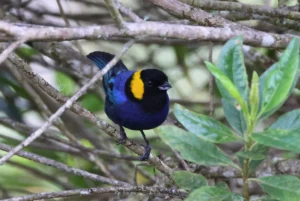
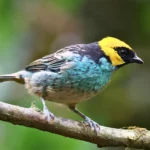
- Golden-collared Tanager – A jaw-droppingly beautiful tanager sporting intense yellow, black, and blue plumage.
- Amethyst-throated Sunangel – A stunning hummingbird featuring a blazing, iridescent pinkish-purple gorget.
- Masked Flowerpiercer – Highly active and acrobatic; uses its hooked bill to pierce the base of tubular flowers to steal nectar.
- Scarlet-bellied Mountain-Tanager – Brilliant, glowing neon-red and blue underparts that stand out vividly against the dark forest mist.
Pro Tips for the Elfin Forest:
- Waterproofing: Drizzle and horizontal mist are constant here. Keep your camera gear inside waterproof bags and wear a heavy-duty Gore-Tex rain jacket.
- Layering: Temperatures typically hover between 5°C and 12°C. Use breathable synthetic base layers combined with a fleece or light down jacket.
Zone 3: The True Cloud Forest (1,200m – 2,800m)
- The Landscape: The undisputed heart of Manu’s biodiversity. Steep, dramatic vertical valleys covered in towering trees packed with epiphytes, tree ferns, orchids, and a non-stop morning symphony of bird calls.
- Key Biological Landmark: San Pedro (1,500m) and the surrounding pristine valleys.
Top 10 Cloud Forest Target Species:
- Andean Cock-of-the-rock – Peru’s national bird. Vivid scarlet-orange males gather in high numbers at traditional forest leks to perform competitive courtship dances at dawn.
- Golden-headed Quetzal & Crested Quetzal – Two of the most spectacular, glittering green and red trogons in the Neotropics.
- Versicolored Barbet – An explosion of color; look for them feeding on fruiting trees along the roadside.
- Peruvian Piedtail (Peruvian Endemic) – A rare, highly sought-after hummingbird with a unique, elongated tail structure.
- Cerulean-capped Manakin (Peruvian Endemic) – Tiny but behaviorally fascinating; males perform elaborate courtship displays on low interior branches.
- Amazonian Umbrellabird – Rare, massive, and entirely black with a prominent crest and an inflatable throat wattle; listen for its deep, booming calls.
- Highland Motmot – A large, striking bird easily identified by its long, racquet-tipped tail feathers.
- Masked Trogon – Deep red underparts and a contrasting black mask; a common anchor species in mixed feeding flocks.
- Paradise Tanager – A multi-colored masterpiece with a neon-green head, sky-blue belly, and crimson back.
- Lyre-tailed Nightjar – A spectacular nocturnal bird; males possess streaming tail feathers up to three times their body length. Look for them at dusk along the road cliffs.
The San Pedro Lek & Hummingbird Feeders:
The San Pedro lek is widely considered one of the greatest wildlife spectacles on Earth. Arriving at the lek platform before dawn allows you to watch dozens of male Cocks-of-the-rock screaming, bowing, and snapping their bills in a frenzy of territorial competition.
Nearby local lodges feature specialized hummingbird feeders that attract a dazzling array of species:
- Buff-tailed Sicklebill (specialized for curved Heliconia flowers)
- Wire-crested Thorntail
- Long-tailed Sylph
- Booted Racket-tail
- Many-spotted Hummingbird
Zone 4: The Subtropical Foothills & Guadua Bamboo (500m – 1,200m)
- The Landscape: A warm, humid transition zone characterized by extensive stands of native Guadua bamboo, dense secondary growth, and riverine secondary forest.
- Key Biological Landmark: The pristine trail networks surrounding the Villa Carmen (Manu Biolodge).
Top 8 Bamboo & Foothills Specialists:
- Manu Antbird (Peruvian Endemic) – A highly localized, reclusive antbird strictly dependent on pristine Guadua bamboo thickets.
- White-cheeked Tody-Tyrant – An incredibly tiny, acrobatic flycatcher that stays low within dense bamboo stalks.
- Rufous-headed Woodpecker – A stunning, heavy-billed woodpecker that specializes in drumming open hollow bamboo culms to hunt for ants.
- Bamboo Foliage-gleaner – Methodically searches dead leaves trapped inside dense bamboo tangles.
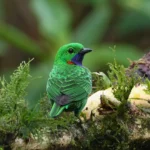
- Scarlet-hooded Barbet – A brilliant, rare Neotropical gem featuring a bright crimson head and a glowing yellow mantle.
- Fine-barred Piculet – One of the smallest woodpeckers in the world; actively chips away at small twigs and vines.
- White-lined Antbird – Sneaks through the dense understory; best detected using patient, strategic playback.
- Rufous-vented Ground-Cuckoo – Highly elusive and legendary among birders; occasionally encountered following army ant swarms on the forest floor.
Pro Tips for the Foothills:
- Insect Management: The transition to lower elevations brings chiggers and biting midges. Spray your socks, boots, and pants with high-quality insect repellent containing DEET or Picaridin.
- Midday Heat: Bird activity drops significantly between 11:30 AM and 2:30 PM as temperatures rise. Focus heavily on early morning and late afternoon trail sessions.
Zone 5: The Upper Amazonian Lowlands (Below 500m)
- The Landscape: Towering high-canopy terra firme forests, dynamic riverine island habitats, gravel river beaches, and lush oxbow lakes. This is where species richness peaks.
Top 8 Lowland Amazonian Targets:
- Hoatzin – Known colloquially as the “Stinkbird”—an evolutionary anomaly that digests leaves via foregut fermentation. Easily found in noisy family groups around oxbow lakes.
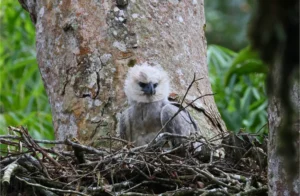
- Harpy Eagle – The apex avian predator of the Amazon. Apex luck is required, but they nest in the tall emergent Brazil nut and Kapok (Ceiba) trees of the region.
- Blue-headed Macaw – A rare, small, highly sought-after macaw that passes overhead in small, vocal pairs.
- Military Macaw – Striking green macaws that use the deep river cliffs and lowland borders for nesting.
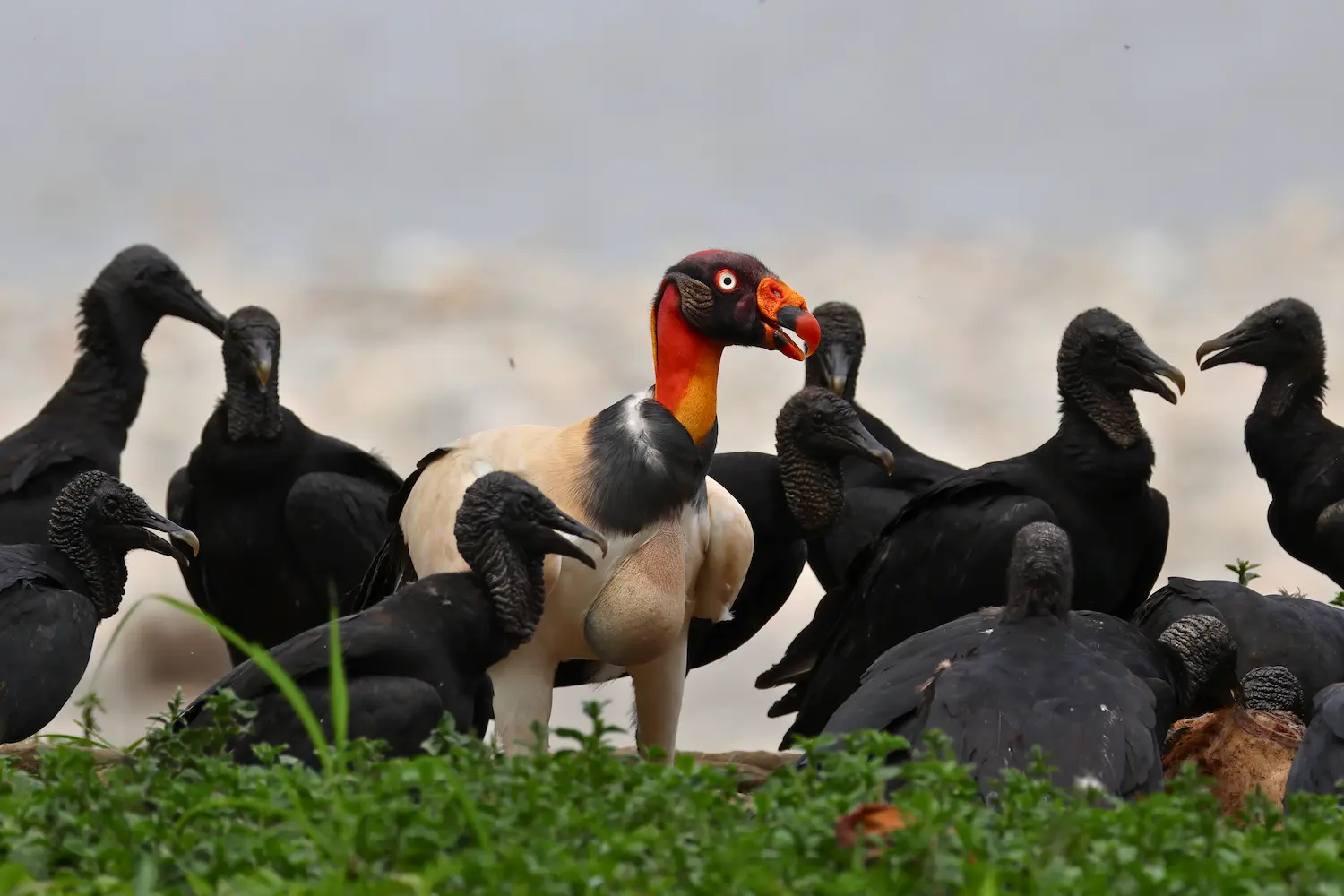
- King Vulture – A massive, pristine white scavenger with a wildly colorful, fleshy caruncle on its bill; seen soaring high over river corridors.
- Great Potoo – Expertly camouflaged during the day to look exactly like a broken tree stump; emits an eerie, haunting wail at night.
- Lanceolated Monklet – A small, secretive, puffbird-like specialist that sits perfectly motionless on low vines near forest streams.
- Amazonian Royal Flycatcher – Possesses a spectacular, fan-shaped colorful crest that it unfurls during rare territorial encounters or when handled.
Technical Photography Guide: Mastering the Manu Light
Photographing birds inside a dense cloud forest or tropical rainforest canopy is notoriously challenging due to low ambient light, dense foliage, and hyperactive avian movement.
Recommended Camera Settings Matrix
| Shooting Scenario | Shutter Speed | Aperture | ISO Strategy | Autofocus (AF) Mode |
| Hummingbirds at Feeders | 1/2500 – 1/4000 sec | f/4 – f/5.6 | Auto ISO (Cap at 6400) | AF-C with Animal Eye Tracking |
| Cock-of-the-rock Lek | 1/250 – 1/500 sec | f/2.8 – f/4 | High Manual ISO (3200–6400) | AF-C Custom Zone Focus |
| Tanager Mixed Flocks | 1/1000 – 1/1500 sec | f/5.6 – f/8 | Auto ISO | AF-C Tracking / Wide Area |
| Perched Canopy Birds | 1/500 – 1/1000 sec | f/4 – f/5.6 | Auto ISO (Cap at 3200) | AF-S Single Point Focus |
| Antpittas on Forest Floor | 1/125 – 1/250 sec | f/4 – f/5.6 | High Manual ISO (3200–6400) | AF-S Pinpoint Focus (Use Tripod) |
| Macaws / Raptors in Flight | 1/2500 – 1/3200 sec | f/5.6 – f/8 | Auto ISO | AF-C Whole Field + Subject Tracking |
Top 5 Field Photography Rules for Manu Road:
- Leverage Mirrorless Technology: If shooting with a modern mirrorless system (Sony, Canon, Nikon, OM System), ensure Animal Eye Detection AF is turned on. It easily locks onto dark eyes hidden in deep, low-contrast foliage.
- The Manual + Auto ISO Secret: Shoot in Manual Mode (M). Set your desired shutter speed to freeze motion and your widest stable aperture (e.g., f/4), then let Auto ISO instantly balance the rapidly changing light as birds move between dark canopy shadows and bright gaps.
- Manage Moisture and Condensation: When moving from an air-conditioned vehicle or cold morning air into humid cloud forest zones, your lens elements will fog up. Keep microfiber cloths and a lens pen easily accessible in an external pocket.
- Use Flash Wisely: For hummingbirds under deep forest cover, a flash paired with a Better Beamer fresnel extender adds essential fill-flash to illuminate structural iridescent feathers. Never use flash on nesting birds or displaying Cocks-of-the-rock.
- Shoot Exclusively in RAW: The dynamic range inside the rainforest is harsh—blindingly bright sky highlights contrasted against deep shadows. RAW files give you the necessary latitude to recover shadow details during post-processing.
The Definitive 7-Day Master Itinerary
Day 1: Cusco to Wayquecha (High Andes to Elfin Forest Entry)
- Route Logistics: Departure from Cusco (3,400m) at 4:30 AM via private 4×4. Drive through the historic town of Paucartambo, then climb to the spectacular entry checkpoint at Abra de Acjanaco (3,560m).
- Key Targets: Chestnut-breasted Mountain-Finch, Bearded Mountaineer, Creamy-crested Spinetail.
- Overnight: Wayquecha Cloud Forest Biological Station (2,900m).
Day 2: Full-Day Exploration of the Wayquecha Trail Network
- Route Logistics: Early morning trail sessions focusing on pristine high-altitude bamboo corridors, mixed-species canopy flocks, and the station’s specialized Antpitta feeding stations.
- Key Targets: Red-and-white Antpitta, Urubamba Antpitta, Gray-breasted Mountain-Toucan, Golden-collared Tanager, Hooded Mountain-Tanager.
- Overnight: Wayquecha Cloud Forest Biological Station (2,900m).
Day 3: Wayquecha to San Pedro (The Upper Cloud Forest Descent)
- Route Logistics: A slow, bird-as-you-go driving descent along the cloud-shrouded road, dropping roughly 1,400 meters in elevation. This stretch is legendary for roadside mixed flocks.
- Key Targets: Golden-headed Quetzal, Highland Motmot, Masked Trogon, Lyre-tailed Nightjar (at dusk on roadside cliffs).
- Overnight: Cock-of-the-Rock Lodge or similar premium field eco-lodge in San Pedro (1,500m).
Day 4: Full Day at the San Pedro Lek & Private Trails
- Route Logistics: Pre-dawn arrival (5:15 AM) at the hidden forest lek platform. Spend the morning observing the spectacular displays, followed by afternoon sessions along the lodge’s hummingbird garden.
- Key Targets: Andean Cock-of-the-rock, Wire-crested Thorntail, Long-tailed Sylph, Booted Racket-tail, Crested Quetzal.
- Overnight: Cock-of-the-Rock Lodge (1,500m).
Day 5: San Pedro to Villa Carmen (Descending to the Foothills)
- Route Logistics: Morning roadside birding down through the lower cloud forest zone, transitioning into the warm, tropical subtropical foothills and native bamboo habitat.
- Key Targets: Manu Antbird, White-cheeked Tody-Tyrant, Rufous-headed Woodpecker, Paradise Tanager.
- Overnight: Villa Carmen (Manu Biolodge) (700m).
Day 6: Full Day Exploring Villa Carmen’s Bamboo & Secondary Trails
- Route Logistics: High-intensity morning exploration of deep Guadua bamboo trails, seeking out highly specialized insectivorous birds, followed by evening owling sessions.
- Key Targets: Scarlet-hooded Barbet, Fine-barred Piculet, Great Potoo, Tawny-bellied Screech-Owl.
- Overnight: Villa Carmen (Manu Biodge) (700m).
Day 7: Lower Foothills to Cusco (The Return Ascent)
- Route Logistics: Final early morning birding around the lodge clearing, followed by a scenic return drive back up the mountain toward Cusco, making targeted tactical stops for any species missed on the descent.
Frequently Asked Questions (FAQ)
How physically demanding is a birding trip along the Manu Road?
The vast majority of your birding takes place directly from the wide, unpaved gravel road or along well-maintained, gently sloping private trail loops operated by the biological stations and lodges. There is no technical climbing or extreme mountaineering required. The primary physical challenges are managing the initial high altitude (4,000m) at the pass, adjusting to humidity, and walking on muddy, slippery trail surfaces in the cloud forest.
Why is a professional local birding guide absolutely mandatory here?
The Manu Road contains an overwhelming concentration of biodiversity. A massive percentage of the target species are highly cryptic, skulking, or look remarkably similar to one another (such as the diverse families of Tyrant Flycatchers and Furnariids). A veteran local guide knows every single call, vocalization, micro-habitat preference, and seasonal fruit tree location, transforming a frustratingly dense wall of green leaves into an organized, highly productive list of successfully spotted lifers.
What medical precautions and vaccinations are recommended?
A Yellow Fever vaccination is strongly recommended for anyone descending into the lower foothills and Amazon basin areas. Additionally, because the route begins at over 3,500 meters, you should speak with your physician regarding preventative altitude sickness medications like Diamox (Acetazolamide). Always carry a personal first-aid kit containing broad-spectrum antibiotics, rehydration salts, and personal medications.
Why Choose Your Manu Road Expedition with Birding Peru Trips?
At Birding Peru Trips, we don’t just run standard tours—we design highly specialized, low-impact field expeditions for passionate birders and demanding wildlife photographers.
- 15+ Years of Proven Field Expertise: Founded and led by Juvenal Iturriaga, a native of the Sacred Valley with over 15 years of professional guiding experience along the Andes-to-Amazon corridor.
- Strict Small-Group Caps: We strictly enforce a maximum limit of 6 participants per departure. This guarantees that every single person has an uncompromised view through the spotting scope, direct interaction with the lead guide, and plenty of space for telephoto lenses on the trail.
- Photographer-Centric Planning: We explicitly understand light angles, camera settings, and the absolute patience required to capture portfolio-grade images of reclusive species.
- True Local Sustainability: We partner directly with native communities, clean eco-lodges, and biological research stations to ensure that your tourism dollars directly fund local conservation efforts and protect Peru’s wild heritage.
Contact Our Team Today to Customize Your Private Manu Road Itinerary https://www.birdingperutrips.com/
The Complete Packing Checklist
Essential Optics & Technical Gear
- Binoculars: High-grade 8×42 or 10×42 optics with excellent low-light light transmission.
- Spotting Scope & Tripod: A 20-60x angled scope paired with a sturdy carbon-fiber tripod for viewing distant forest canopies.
- Camera Gear: DSLR or Mirrorless body with a fast telephoto lens (minimum 400mm–600mm equivalent, preferably f/4 or f/5.6).
- Flash & Fresnel Extender: For fill-light in dark canopy environments.
- Illumination: High-lumens headlamp featuring a dedicated Red Light Mode to avoid blinding nocturnal wildlife.
- Reference Literature: “Birds of Peru” field guide (Schulenberg, Stotz, Lane, O’Neill, & Parker).
Specialized Field Clothing Check by Elevation
- High Andes (3,500m+): Thermal base layers, windproof/insulated down jacket, warm beanie, and fleece gloves.
- Cloud Forest & Elfin Forest (1,500m – 3,500m): High-end breathable rain jacket (Gore-Tex), waterproof hiking pants, moisture-wicking shirts, and rugged waterproof hiking boots with deep tread.
- Foothills & Lowlands (Below 1,200m): Lightweight, quick-dry, light-colored long-sleeve field shirts and technical trousers (for insect and sun protection).