The Ultimate Guide for Birders, Wildlife Photographers & Nature Lovers
Peru stands as an unrivaled global titan for birdwatching. Boasting more than 1,900 recorded bird species and approximately 120 strict endemics found nowhere else on Earth, this biodiverse nation is the ultimate destination for dedicated birders, wildlife photographers, and conservationists.
From the moisture-laden cloud forests of the northern Andes to the isolated dry forests of the Tumbesian northwest, Peru offers a masterclass in avian evolution. Whether your heart is set on witnessing the courtship display of the iconic Marvelous Spatuletail, capturing the cryptic profile of the Long-whiskered Owlet, or embarking on a comprehensive Northern Peru birding expedition, this guide provides the precise geographic data, field insights, and technical advice required for a successful trip.
At Birding Peru Trips, we design specialized small-group and private birding itineraries led by passionate, local guides who have spent decades tracking these target endemics safely and ethically.
Why Peru Is One of the Best Birding Destinations in the World
Peru’s unmatched avian diversity is driven by its dramatic altitudinal gradients and sharp habitat fragmentation. The country is a patchwork of complex ecosystems:
- The Upper Amazonian Basin: Lowland terra firme and varillal (white-sand) forests.
- The High Andes & Puna: Grassy paramo, elfin forests, and high-altitude wetlands.
- The Cloud Forests: Sub-montane and montane mist forests draped in epiphytes.
- The Tumbesian Region: Equatorial dry forests and arid coastal scrub.
This geographic complexity created isolated micro-habitats where species evolved independently for millions of years, yielding an extraordinarily high concentration of restricted-range birds, unique hummingbirds, tapaculos, and specialized tanagers.
Quick List: Top 10 Endemic Birds in Peru
- Marvelous Spatuletail (Loddigesia mirabilis)
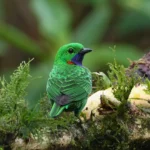
- Scarlet-banded Barbet (Capito wallacei)
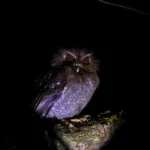
- Long-whiskered Owlet (Xenoglaux loweryi)
- White-winged Guan (Penelope albipennis)
- Junin Grebe (Podiceps taczanowskii)
- Inca Wren (Pheugopedius eisenmanni)
- Peruvian Plantcutter (Phytotoma raimondii)
- Golden-backed Mountain-Tanager (Cnemathraupis aureodorsalis)
- White-masked Antbird (Pithys castaneus)
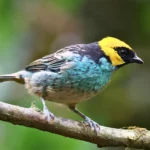
- Yellow-scarfed Tanager (Iridosornis reinhardti)
Deep Dive: Peru’s Top 10 Target Endemics
1. Marvelous Spatuletail (Loddigesia mirabilis)
- Conservation Status: Endangered
- Primary Hotspot: Huembo Reserve (Pomacochas), Northern Peru
- Optimal Season: May to November (Active feeding and display periods)
- Habitat: Cloud forest edges and second-growth montane scrub dominated by Suspiros (Alstroemeria) flowers.
Arguably the most spectacular hummingbird on earth, the male Marvelous Spatuletail features four tail feathers, two of which are elongated, wire-like rackets that end in large, iridescent violet-blue spatules. The bird can move these feathers independently during its frenetic, high-speed lek courtship displays.
Field Tip: While the feeders at Huembo offer reliable, close-up views, catching a male performing on an active lek requires getting into position just before sunrise.
Bird Photography Tips:
- Use a minimum shutter speed of 1/2500 to freeze the hyper-fast wingbeats.
- Overcast, bright cloudy days are your friend here—they eliminate harsh shadows and prevent the iridescent gorget and spatules from blowing out or turning flat black.
- Pack a fast 400mm or 600mm prime lens to maintain a respectful distance from active feeding zones.
2. Scarlet-banded Barbet (Capito wallacei)
- Conservation Status: Vulnerable
- Primary Hotspot: Peak 1538, Cordillera Azul National Park (Loreto/Ucayali border)
- Optimal Season: July to October (Drier months for remote ridge access)
- Habitat: Humid, mossy sub-montane forest at elevations between 1,350 and 1,500 meters.
Discovered during a 1996 LSU expedition, the Scarlet-banded Barbet is a Holy Grail bird for global listers. Its massive ivory bill and brilliant scarlet breast band contrast starkly with its jet-black upperparts. It occupies an incredibly restricted, remote geographical range in the pristine sub-montane canopy.
- Field Notes: This barbet is highly canopy-dependent. It travels in small, intra-species groups or joins fast-moving mixed-species foraging flocks. Listen for its song—a low-pitched, rapid trill that sounds deceptively like a distant woodpecker drumming.
- Bird Photography Tips: The dense, misty canopy of the Cordillera Azul demands exceptional low-light capabilities. Push your ISO higher (3200-6400) to keep shutter speeds fast enough to combat canopy wind movement, and rely on fast f/2.8 or f/4 lenses.
3. Long-whiskered Owlet (Xenoglaux loweryi)
- Conservation Status: Endangered
- Primary Hotspot: Abra Patricia Reserve & Fundo Alto Nieva
- Elevation Range: 2,400 to 2,900 meters
- Habitat: Stunted, mossy elfin forests with dense bamboo (Chusquea) understories.
The Long-whiskered Owlet is one of the smallest and most enigmatic owls globally. Named for the elongated facial bristles that extend past its facial disc, this nocturnal specialist went virtually unseen in the wild for decades after its discovery.
- Field Notes: Spotting this species requires a dedicated nocturnal hike along steep, slick trails. Experienced local guides locate individuals by listening for their soft, rhythmic, frog-like “whoo” calls coming from the dense bamboo thickets.
- Bird Photography Tips: Flash must be used with extreme restraint and diffusion to protect the bird’s sensitive nocturnal vision. Never use continuous bright spotlights; rely instead on brief, low-power fill flash or ambient-light assist under the direct supervision of an ethical guide.
4. White-winged Guan (Penelope albipennis)
- Conservation Status: Endangered
- Primary Hotspot: Chaparrí Ecological Reserve & Quebrada Frejolillo
- Habitat: Equatorial dry forests and rocky, steep canyons of northwestern Peru.
The White-winged Guan is a legendary conservation success story. Thought to be extinct for nearly a century, it was rediscovered in 1977. This large cracid is instantly identifiable by its overall dark plumage broken by brilliant white primary wing feathers, a bright red throat wattle, and pink facial skin.
- Field Notes: Unlike the dark, dense cloud forests, the arid Tumbesian ecosystem offers open terrain. Look for them early in the morning when they descend from rocky cliffs to drink from permanent waterholes or feed on Guayacán fruits.
- Bird Photography Tips: Take advantage of the clean, directional morning light characteristic of the dry forest. Position yourself with the sun directly behind you to capture the stark contrast of the white wing panels against the dark body.
5. Junin Grebe (Podiceps taczanowskii)
- Conservation Status: Critically Endangered
- Primary Hotspot: Lake Junín (Reserva Nacional de Junín), Central Peru
- Elevation: 4,080 meters
The Junin Grebe is a completely flightless waterbird restricted entirely to the hyper-specific, high-altitude ecosystem of Lake Junín. This slender, elegant grebe, with its striking red eyes and pale gray plumage, faces severe, ongoing threats from mining runoff, variable water levels, and extreme weather.
- Field Notes: Observing this rare target requires taking a specialized boat out into the open waters and reed fringes of the lake.
- Ethical Birding Advice: Because this population is critically low, keeping a respectful distance is vital. Avoid chasing birds with the boat, as forcing a flightless bird to continuously dive causes severe energy depletion at 4,000+ meters altitude.
6. Inca Wren (Pheugopedius eisenmanni)
- Conservation Status: Least Concern (Restricted Range)
- Primary Hotspots: Abra Málaga (Cusco) & Machu Picchu Historical Sanctuary
- Habitat: Dense bamboo thickets (Chusquea) along humid, high-Andean slopes.
While not threatened, the Inca Wren is an essential target for birders visiting southern Peru. This highly vocal, boldly patterned wren features a striking black-and-white striped face and a rich, rufous body. It spends its time foraging in pairs deep within tangled bamboo massifs.
- Field Notes: This species is notoriously secretive. It is almost always detected first by its loud, melodious, duetting songs echoing from the bamboo.
- Birding Tips: When birding the old Inca trails near Machu Picchu or the lower cloud forest sections of the famous Abra Málaga route, stay patient along the dense bamboo edges during the early morning push. Movement is fast and brief.
7. Peruvian Plantcutter (Phytotoma raimondii)
- Conservation Status: Vulnerable
- Primary Hotspot: Bosque de Pómac Historical Sanctuary (Lambayeque)
- Habitat: Arid coastal desert scrub and equatorial dry forests.
A truly unique evolutionary branch, the Peruvian Plantcutter is an uncommon passerine possessing a robust, finely serrated bill adapted for sawing through tough desert leaves and buds, particularly from Algarrobo (mesquite) trees. Males feature an eye-catching rufous belly patch and a bright yellow eye.
- Field Notes: They are easiest to locate when males perch conspicuously on top of low desert scrub to sing their distinctive, mechanical call—which sounds exactly like a creaking old door or a scraping zip-tie.
- Bird Photography Tips: The dry, sandy environment provides exceptional natural light and clean, uncluttered backgrounds. Watch out for midday heat shimmer, which can distort long-lens details; get your core shots before 9:00 AM.
8. Golden-backed Mountain-Tanager (Cnemathraupis aureodorsalis)
- Conservation Status: Endangered
- Primary Hotspot: Bosque Unchog (Huánuco, Central Route)
- Elevation Range: 3,400 to 3,700 meters
- Habitat: Isolated, high-altitude elfin forest patches and paramo edges.
The Golden-backed Mountain-Tanager is widely considered one of South America’s most beautiful and sought-after passerines. This massive tanager sports a shimmering golden back, a deep black hood, and rich blue wing coverts. It lives exclusively in the fragile, stunted elfin forests of central Peru.
- Field Notes: This species does not inhabit the northern Abra Patricia circuit; it is the crown jewel of the Central Peru route at Bosque Unchog. They are typically encountered in small, fast-moving mixed-species flocks along the treeline.
- Bird Photography Tips: Hiking at 3,600+ meters means unpredictable weather—heavy mist and sudden downpours are common. Ensure your camera body and lenses are fully weather-sealed, and pack a circular polarizing filter to cut down on wet foliage reflections and make that golden plumage pop.
9. White-masked Antbird (Pithys castaneus)
- Conservation Status: Near Threatened
- Primary Hotspot: San Lorenzo area (Loreto, Northern Amazonia)
- Habitat: Humid foothill and transitional lowland forests, often showing an affinity for specific soil profiles.
For generations, the White-masked Antbird was known to science from a single, enigmatic specimen collected in 1937. Since its dramatic rediscovery, it has become a legendary target. It features a rich, solid chestnut body framed by a striking, bright white facial mask.
- Field Notes: Note that this species is not found at the Allpahuayo-Mishana Reserve near Iquitos (which is famous for the Allpahuayo Antbird). To see the White-masked Antbird, expeditions travel deep into the remote forests around San Lorenzo via Yurimaguas. This bird is a strict army ant swarm follower, relying on moving swarms to flush out insect prey.
- Bird Photography Tips: The dark, cluttered understory of primary Amazonian forest pushes camera sensors to their limits. A fast prime lens (300mm f/2.8 or 600mm f/4) combined with high-performance tracking autofocus is essential for capturing these quick, shadow-dwelling birds.
10. Yellow-scarfed Tanager (Iridosornis reinhardti)
- Conservation Status: Least Concern (Restricted Range)
- Primary Hotspots: Abra Patricia & Bosque Unchog
- Habitat: Humid montane cloud forest canopy and elfin forest borders.
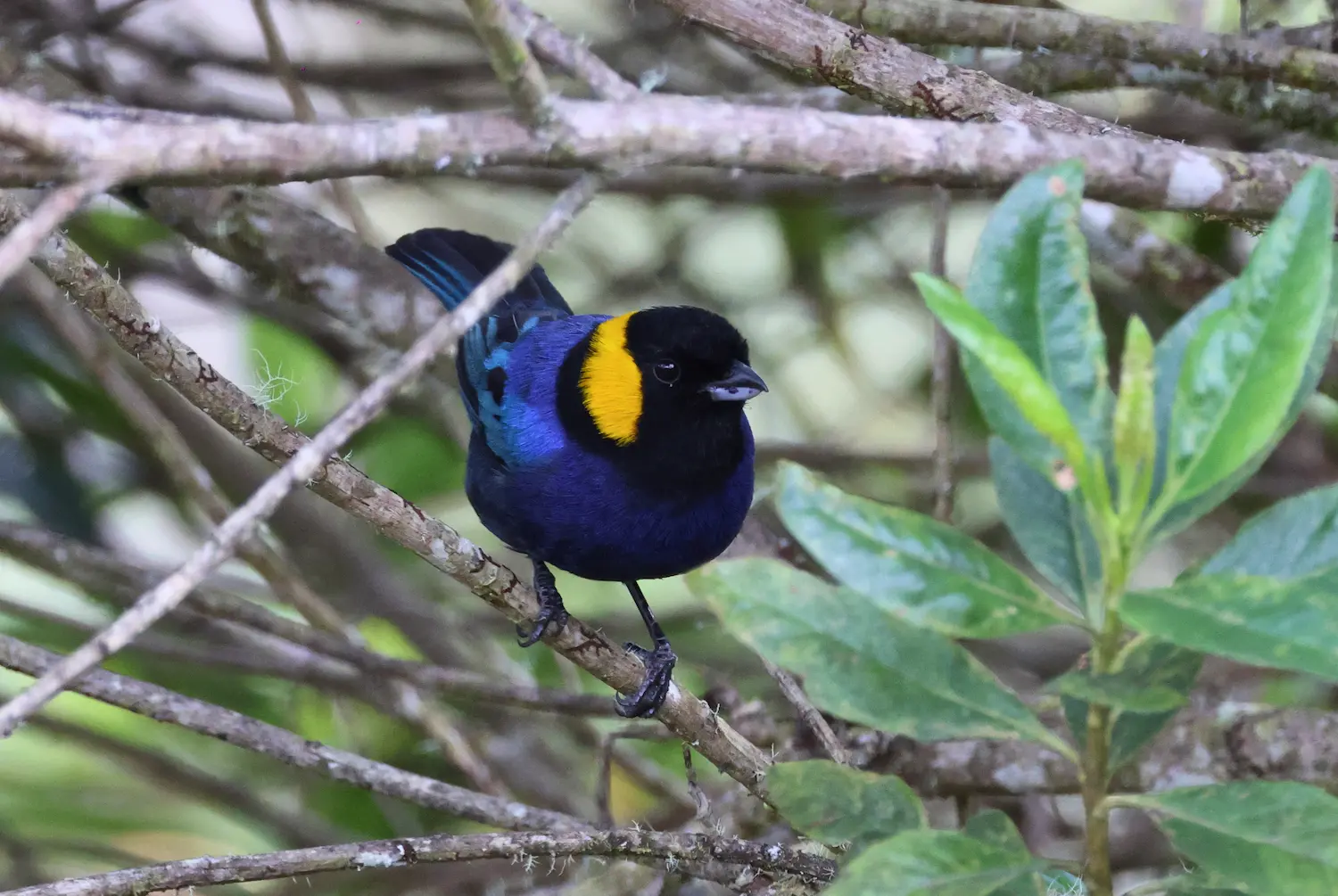
A true cloud forest beauty, the Yellow-scarfed Tanager is a dark, blue-black tanager defined by a brilliant, wrap-around yellow band across its hindcrown and nape. It is a classic example of the spectacular canopy diversity found along the high ridges of the Peruvian Andes.
- Field Notes: They are active canopy foragers, often traveling in pairs or small groups within multi-species tanager flocks. They favor branches thick with moss, lichens, and small berries.
- Best Birding Season: May through October provides the safest trail accessibility and highest flock activity along the mountain passes.
When is the Best Time for Birdwatching in Peru?
The optimal window for a birding tour in Peru runs during the dry season, from May to October.
Seasonal Insights by Region:
- Northern Peru Cloud Forests (Abra Patricia/Huembo): Drier months mean significantly safer driving conditions along mountain roads, minimal trail mud, and predictable morning activity at hummingbird feeders and lek sites.
- The High Andes (Cusco/Huánuco): Clear skies provide cold nights but beautifully bright, crisp mornings—perfect for spotting elfin forest specialists and high-altitude wetland species before cloud cover rolls in.
- The Amazon Lowlands: While the rainforest experiences precipitation year-round, traveling during the lower-water months (July to September) exposes river islands and simplifies tracking army ant swarms.
Our Commitment to Ethical Birding in Peru
At Birding Peru Trips, we believe that tourism must actively protect the fragile ecosystems that host Peru’s endemic species. As local operators, our field practices are anchored in sustainability:
- Strict Playback Mitigation: We minimize the use of recorded bird calls to prevent causing undue stress, territorial fatigue, or nesting disruption to endangered species.
- Supporting Community Reserves: Our itineraries intentionally utilize community-managed eco-lodges and local reserves (such as Chaparrí and Huembo), ensuring that tourism dollars directly incentivize habitat conservation for local families.
- Small-Footprint Expeditions: Keeping our groups small ensures low-impact trail movement, reduces ambient noise, and guarantees a high-quality, personalized experience for every guest.
Expert-Led Northern Peru Birding Tours
Northern Peru remains one of the ultimate frontiers for serious birders seeking restricted-range lifers. Our customized routes cover iconic birding hotspots, including:
- Abra Patricia & the Owlet Lodge
- Huembo Hummingbird Sanctuary
- The Tumbesian Dry Forests of Chaparrí
- The remote sub-montane ridges of Cordillera Azul
Our itineraries are designed to maximize your time in the field with local expert guides who know every call, territory, and behavior.
https://www.birdingperutrips.com/northern-peru-birding-spatuletail-endemics-12-days/
Frequently Asked Questions
1. How many endemic birds are found in Peru?
Peru is home to approximately 120 endemic bird species. The exact number fluctuates slightly due to ongoing taxonomic splits discovered by ornithologists studying isolated Andean valleys and Amazonian river pockets.
2. What is the single most famous endemic bird in Peru?
The Marvelous Spatuletail (Loddigesia mirabilis) holds this title. Its unparalleled tail conformation and hyper-localized range in the Utcubamba Valley make it a global symbol for avian conservation.
3. Where can I see the Inca Wren?
The Inca Wren is restricted to the bamboo-dominated montane forests of southeastern Peru. The most accessible hotspots to find it are along the manual trails of the Machu Picchu Historical Sanctuary and the pristine cloud forest zones of the Abra Málaga pass.
4. Is Peru safe for solo bird photographers?
Yes, especially within established birding circuits and private reserves. However, accessing remote endemic habitats (like Bosque Unchog or Peak 1538) involves complex wilderness logistics and high altitudes, making traveling with an experienced local operator highly recommended.
Ready to Tick Your Ultimate Peru Endemics?
Let a locally owned team handle the high-altitude logistics, remote lodge bookings, and precise field tracking. Get in touch today to craft your custom private or small-group birding itinerary for the 2026/2027 season.
https://www.birdingperutrips.com/peru-fixed-departure-birding-tours/