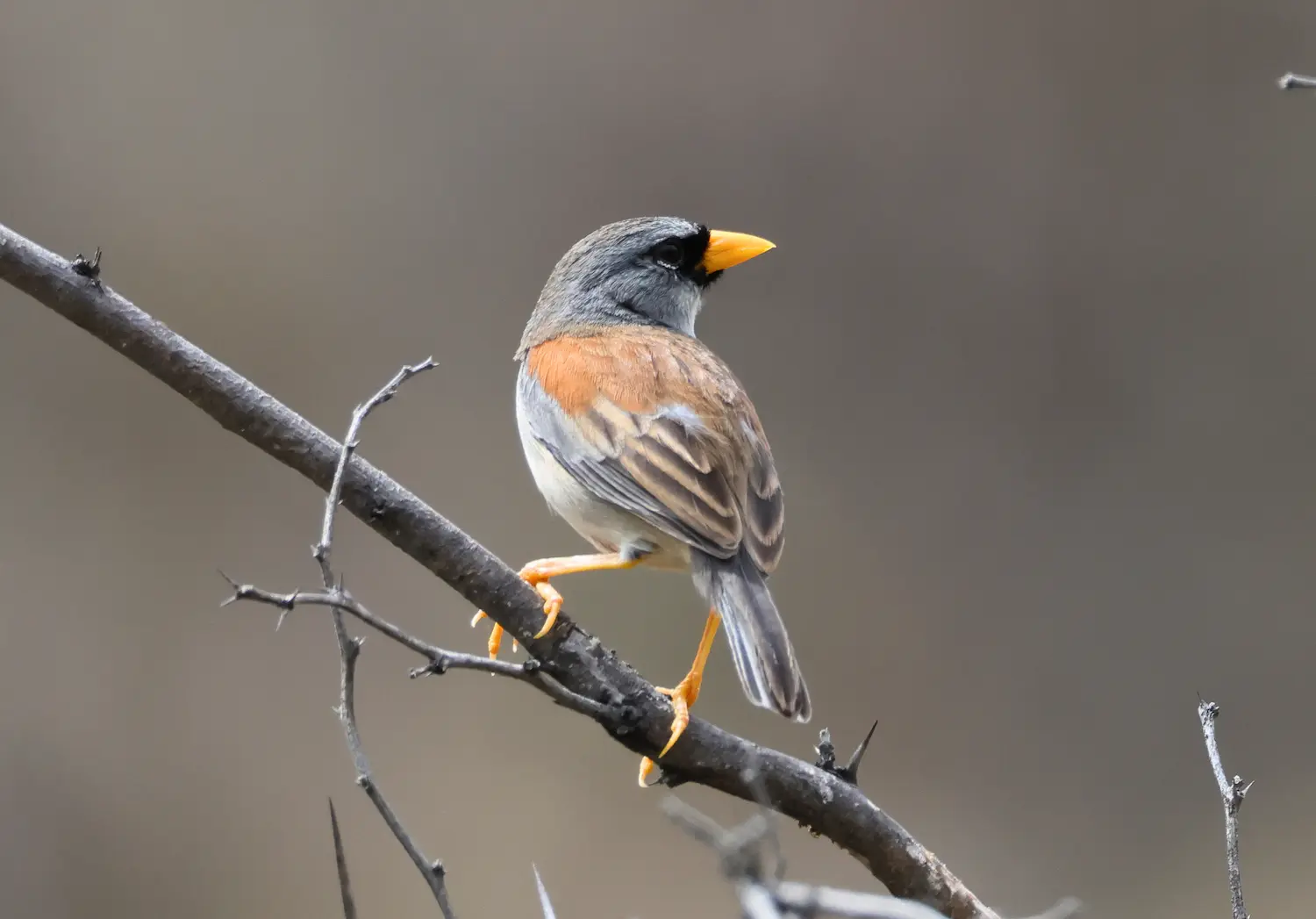
Peru is a land of avian superlatives. With over 1,900+ bird species—nearly 20% of the world’s total—it offers an unparalleled diversity of habitats. From the arid coastal deserts and high-altitude Andean peaks to the lush Amazon basin, Peru is the ultimate destination for “listers” and wildlife photographers alike.
At Birding Peru Trips, we have spent over two decades leading specialized expeditions across these landscapes. This is our definitive guide to the top 10 birding hotspots in Peru for the 2026 season.
1. Manu Road: The World’s Premier Birding Route (Cusco)
The legendary Manu Road is widely considered the best birding route on the planet. As you descend from the high Andes at 4,000m down to the Amazon lowlands, you pass through distinct life zones, each harboring its own unique biodiversity.
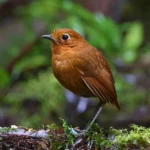
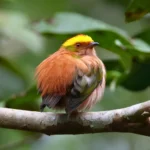
- Key Species: Andean Cock-of-the-Rock, Golden-headed Quetzal, Amazonian Umbrellabird, and a dazzling array of Tanagers.
- Photography Tip: The Andean Cock-of-the-Rock lek near San Pedro is iconic. To capture the vibrant reds in the dark cloud forest, use a fast lens (f/2.8 or f/4) and a sturdy tripod.
- Why Visit: It offers the highest concentration of species accessible by a single road, transitioning from elfin forest to montane cloud forest.
2. Huembo Center: Stronghold of the Marvelous Spatuletail (Amazonas)
Located in the Northern Peru Birding Circuit, the Huembo Center is a vital conservation area and the global stronghold for the Marvelous Spatuletail (Loddigesia mirabilis), often cited as the most beautiful hummingbird in the world.
- Key Species: Marvelous Spatuletail, Little Woodstar, and Emerald-bellied Puffleg.
- Wildlife Photographer Note: The Spatuletail is most active at the feeders in the early morning. To freeze the rapid movement of their unique “spatule” tail feathers, set your shutter speed to at least 1/2000.
- Why Visit: Excellent feeder setups allow for close-up, high-speed photography that is difficult to achieve anywhere else.
3. Abra Patricia & Owlet Lodge: Mysterious Cloud Forests (San Martin)
This private reserve protects a vital corridor of stunted elfin forest. It is the cornerstone for anyone chasing the “Lost Birds” of the Andes.
- Key Species: Long-whiskered Owlet, Ochre-fronted Antpitta, and Royal Sunangel.
- Why Visit: This is the only reliable location to see the tiny, enigmatic Long-whiskered Owlet. Staying at the Owlet Lodge puts you right in the heart of their habitat for night-birding sessions.
- Conservation Impact: Your visit supports the Asociación Ecosistemas Andinos (ECOAN) in protecting this fragile ecosystem.
4. Tambopata National Reserve: Amazonian Clay Licks (Madre de Dios)
The lowland rainforests of Tambopata offer the most spectacular wildlife displays in the Amazon. This is a “must” for photographers looking for high-impact color and action.
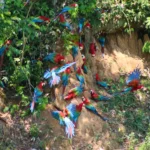
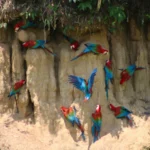
- The Macaw Clay Lick Spectacle: Watch hundreds of Red-and-green, Blue-and-yellow, and Scarlet Macaws gather at “collpas” (clay licks).
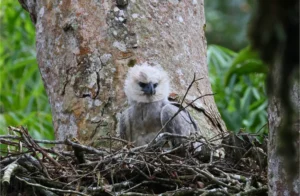
- Key Species: Harpy Eagle, Giant Otter, Hoatzin, and Pale-winged Trumpeter.
- Best Time: The dry season (May to October) offers the best visibility and most consistent activity at the clay licks.
5. Abra Malaga: High-Altitude Polylepis Specialists (Cusco)
A high mountain pass located near Machu Picchu, Abra Malaga provides access to rare Polylepis forest specialists that live at the edge of the world.
- Key Species: Royal Cinclodes, White-browed Tit-Spinetail, and White tufted Sunbeam.
- Travel Tip: This is high-altitude birding at its finest (above 4,300 meters). Ensure you are well-acclimated in Cusco before attempting the hike to the Polylepis patches.
- Why Visit: It is the most accessible spot for several critically endangered endemics found nowhere else.
6. Paracas National Reserve: The “Galapagos of Peru” (Ica)
Where the coastal desert meets the cold, nutrient-rich waters of the Humboldt Current, you find an explosion of marine avian life.
- Key Species: Humboldt Penguin, Inca Tern, Peruvian Booby, and Chilean Flamingo.
- Photography Tip: Take a boat tour to the Ballestas Islands. The Inca Tern, with its white “mustache,” perched against red sea cliffs makes for a world-class composition.
- Why Visit: It offers a complete contrast to the Andean and Amazonian routes, perfect for coastal birding.
7. Iquitos & Allpahuayo-Mishana: White-Sand Forest Rarities (Loreto)
The gateway to the Northern Amazon, Iquitos is home to the unique “Varillal” (white-sand forest) specialists of the Allpahuayo-Mishana National Reserve.
- Key Species: Allpahuayo Antbird, Ancient Antwren, and Iquitos Gnatcatcher.
- Expert Guide Note: These species are highly localized and elusive. A professional guide with deep knowledge of vocalizations is mandatory here.
- Why Visit: To check off some of the rarest and most soil-specific birds in the Amazon basin.
8. Colca Canyon: Soaring with the Condors (Arequipa)
The Colca Canyon is one of the deepest in the world and the undisputed best place to witness the “King of the Andes.”
- Key Species: Andean Condor, Giant Hummingbird, and Black Metaltail.
- Photography Tip: Arrive at Cruz del Condor before 8:00 AM. As the thermals rise, the Condors will soar past the viewpoints at eye level, allowing for incredible flight shots.
- Why Visit: Witnessing a 3-meter wingspan bird at close range is a spiritual experience for any nature lover.
9. Satipo Road: The Adventurous Central Circuit (Junin)
For those seeking a rugged, off-the-beaten-path experience, the Satipo Road connects the high Andes with the central Amazonian slopes.
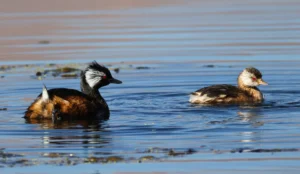
- Key Species: Fire-maned Aureole, Eye-ringed Thistletail, and the rare Junin Grebe (at nearby Lake Junin).
- Logistics: This route requires a 4×4 vehicle and a guide experienced with central Peruvian terrain.
- Why Visit: High potential for rare sightings with virtually no other birding groups in sight.
10. Machu Picchu Sanctuary: Archaeology Meets Ornithology
The cloud forests surrounding the Machu Picchu citadel are a birding paradise often overlooked by the thousands of daily tourists.
- Key Species: Torrent Duck (in the Urubamba River), Inca Wren,Masked Fruiteater, and the endemic Green-and-white Hummingbird.
- Birding Strategy: Spend the early morning birding the railway tracks or the grounds of the Inkaterra Machu Picchu Pueblo Hotel before entering the ruins in the afternoon.
- Why Visit: To combine one of the World’s Wonders with high-quality cloud forest birding.
Comparing Peru’s Premier Birding Circuits
Selecting the ideal birding route in Peru is a strategic decision—one that should align with your target species, travel style, and time availability. Each circuit offers a distinct ecological profile and a unique set of flagship species, making Peru one of the most rewarding birding destinations on Earth.
Northern Birding Circuit – Endemics & Hummingbird Hotspots
This is Peru’s most iconic route for endemic species and high-impact hummingbird photography. The northern Andes host an extraordinary concentration of restricted-range birds found nowhere else on the planet.
Signature Species: Marvelous Spatuletail
Ideal Duration: 12–20 days
Best For: Serious birders and photographers seeking rare endemics and curated lodge-based experiences
Southern Birding Circuit – Biodiversity & Scenic Landscapes
A powerful combination of world-class birding and dramatic Andean scenery. This circuit integrates cloud forests, high-altitude ecosystems, and cultural highlights, including access to the Machu Picchu region.
Signature Species: Andean Cock-of-the-Rock
Ideal Duration: 10–14 days
Best For: Birders looking to combine biodiversity, landscapes, and iconic Peru travel experiences
Central Birding Circuit – Rarities & High-Andean Specialists
A more specialized route designed for advanced birders targeting elusive and range-restricted species in Peru’s central highlands. Less traveled, yet highly rewarding.
Signature Species: Junin Grebe
Ideal Duration: 12–15 days
Best For: Experienced birders focused on rare sightings and high-elevation ecosystems
FAQ: Planning Your 2026 Peru Birding Trip
1. When is the best time for birding in Peru?
The dry season (May to October) is ideal for photography and travel. However, the rainy season (November to April) is better for “ear birding” as many species are more vocal during the breeding season.
2. Do I need a specialized birding guide?
Absolutely. Many Peruvian birds are “skulkers” or look-alike species. A local expert who knows territories and calls is the difference between a “heard-only” and a “life bird.”
3. Is birding in Peru physically demanding?
It varies. Routes like Abra Malaga are at high altitudes (4,000m+), while the Amazon requires heat tolerance. At Birding Peru Trips, we customize itineraries to match your fitness level.